Polio surveillance
A way to spot districts where non-polio AFP reporting has fallen, even when they still meet the reporting target. It compares each district with its own history and the national pattern.
Polio surveillance
A way to spot districts where non-polio AFP reporting has fallen, even when they still meet the reporting target. It compares each district with its own history and the national pattern.
Acute flaccid paralysis (AFP) surveillance is how polio programmes find poliovirus in children. Its performance is usually judged by the non-polio AFP (NPAFP) rate against a fixed target. A district can keep meeting that target while reporting substantially fewer cases than its own history would predict, and that kind of fall can go unnoticed.
I developed the small-area modelling approach for locating district-level AFP surveillance blindspots. I led its first application, in Nigeria, as lead author of the analysis. The analysis was then replicated in three further polio-priority countries. I wrote the spi package with Chibuzor Christopher Nnanatu and maintain it. I also wrote polished, which prepares the POLIS surveillance data that spi uses.
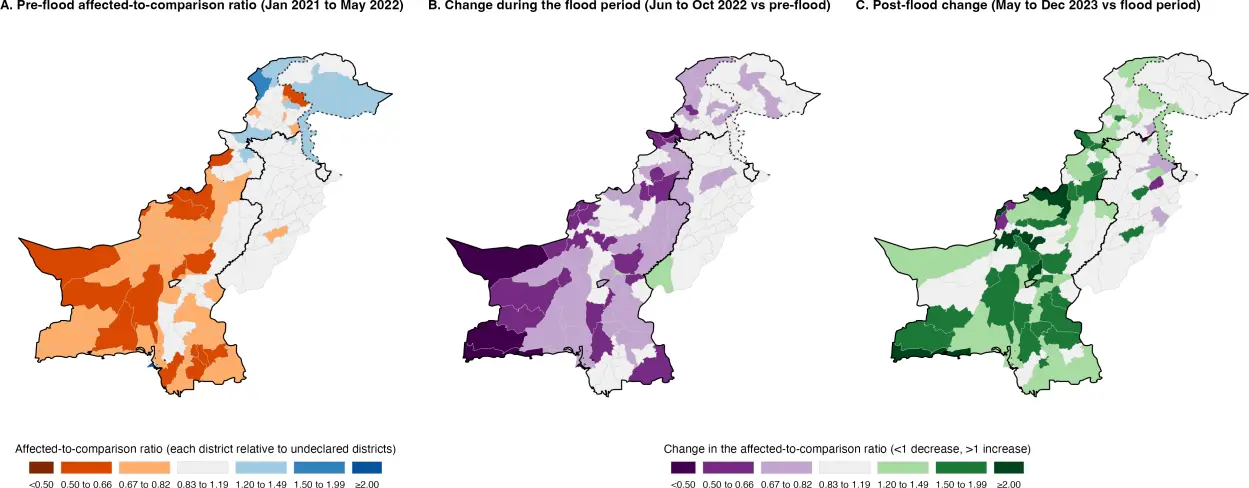
The surveillance performance index (SPI) compares each district’s reported NPAFP cases with the number expected from its own history, relative to the national pattern. It is implemented in the spi R package (version 0.3.0), which includes synthetic example data for a fictional country. The four-country analysis is under review.
The maps above are from the manuscript, which is under review.