Mohamed A. Yusuf, PhD
  • About
  • Software
  • Publications
  • Experience
  • Photography
  • Contact

Surveillance Performance Index

Skip to main content

Surveillance Performance Index for AFP reporting

Polio surveillance

Developed a method to identify districts reporting fewer non-polio AFP cases than expected, including those meeting established surveillance targets.
2025–2026 Polio and VPD surveillance Spatial epidemiology Open-source software

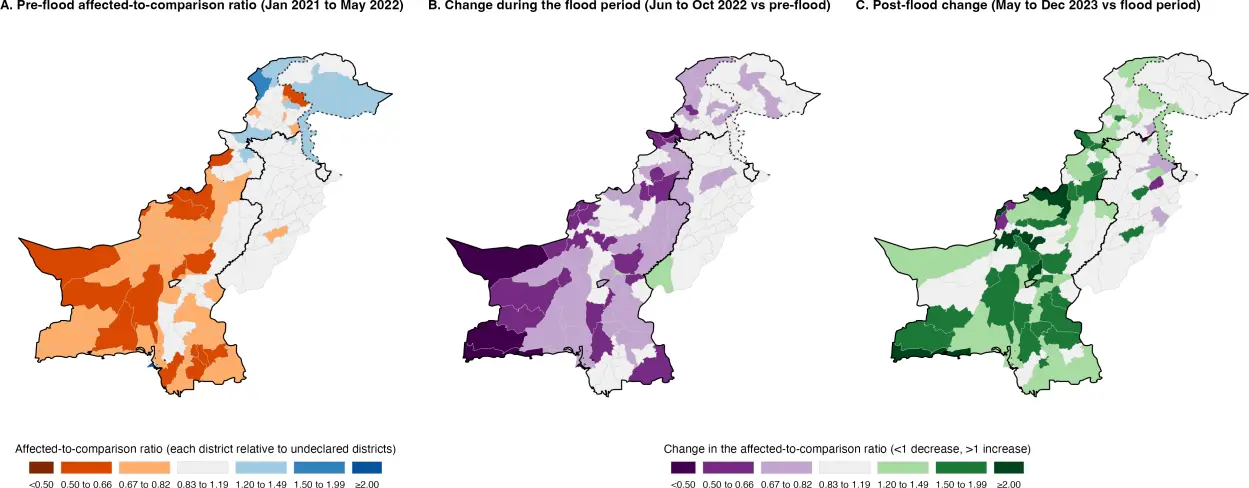
Three maps of Pakistan districts showing relative non-polio AFP reporting before the 2022 floods, the change during the flood period and the change after it.
Figure from a manuscript under review Figure 1 from the SPI manuscript, under review: relative NPAFP reporting in Pakistan before, during and after the 2022 floods. Values below 1 mean fewer cases reported than expected. The boundaries and names shown and the designations used on this map do not imply the expression of any opinion whatsoever on the part of the World Health Organization concerning the legal status of any country, territory, city or area or of its authorities, or concerning the delimitation of its frontiers or boundaries. Dotted and dashed lines on maps represent approximate border lines for which there may not yet be full agreement.

Overview

Acute flaccid paralysis (AFP) surveillance is how polio programmes find poliovirus in children. Its performance is usually judged by the non-polio AFP (NPAFP) rate against a fixed target. A district can keep meeting that target while reporting substantially fewer cases than its own history would predict, and that kind of fall can go unnoticed.

My contribution

I developed the small-area modelling approach for locating district-level AFP surveillance blindspots. I led its first application, in Nigeria, as lead author of the analysis. The analysis was then replicated in three further polio-priority countries. I wrote the spi package with Chibuzor Christopher Nnanatu and maintain it. I also wrote polished, which prepares the POLIS surveillance data that spi uses.

Selected outputs

The surveillance performance index (SPI) compares each district’s reported NPAFP cases with the number expected from its own history, relative to the national pattern. It is implemented in the spi R package (version 0.3.0), which includes synthetic example data for a fictional country. The four-country analysis is under review.

The maps above are from the manuscript, which is under review.

  • spi package archive on Zenodo (doi:10.5281/zenodo.23008378)

Related

Software

spi hex logo spi polished hex logo polished

Publications

  1. 2026 Manuscript

    Relative reporting shortfalls in districts meeting the non-polio acute flaccid paralysis target: a four-country observed-to-expected analysis

    Yusuf, M. A., Nnanatu, C. C., Kroiss, S., Krow-Lucal, E., Boateng, K., Tatem, A. J., Utazi, C. E., Hassan, M. D., Kabamba, L., Solomon, J. P., Gedi, M., Touray, K., Ainan, S., Rathee, M., Soghaier, M., et al.

    Under review

Mohamed A. Yusuf, PhD

GitHub Google Scholar ORCID LinkedIn